

Beards, More Than Just Facial Hair: A Journey Through History.
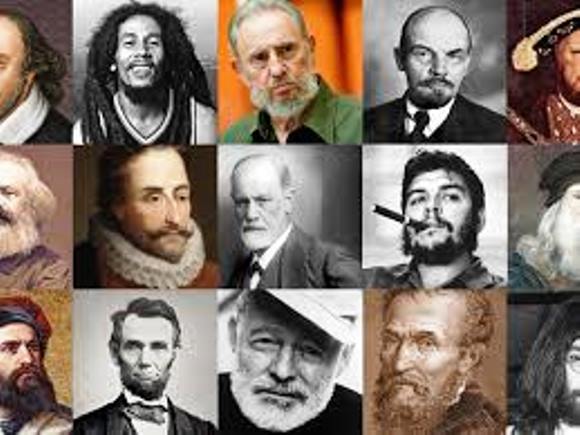
Las barbas mƠas famosas de la historia. (Tomada de El Español)
So the next time you see a beard, remember: you’re not just seeing aesthetics. You’re seeing centuries of evolution, power, philosophy, fashion, and revolution.
From the dawn of humanity, when primitive man faced the cold and sun with no protection other than his skin, the beard already served a purpose: natural warmth, a shield against the elements. But what began as a biological necessity soon became a cultural, spiritual, and political symbol.
In Antiquity, beards were emblems of power. In Egypt, pharaohs wore false beards braided with gold as a sign of divinity. In Mesopotamia and Persia, kings sported long, well-groomed beards, a reflection of wisdom and authority. And in Greece, philosophers like Socrates and Plato not only thought deeply, they also did so with beards: the beard was the face of wisdom.
During the Middle Ages, the beard acquired connotations of bravery. Knights wore them as a sign of virility and courage in battle. But in classical Rome, curiously, the fashion shifted toward shaving. A beard was seen as a sign of neglect, and a clean face as a symbol of civilization.
During the Renaissance and the 19th century, beards made a strong comeback. They were a status symbol: only wealthy men could afford to grow them. In Russia, Tsar Peter the Great even banned them, imposing taxes on those who refused to shave.
By the 20th century, beards had become an ideological symbol.
In the 60s and 70s, they were a symbol of rebellion, counterculture, and resistance against the establishment. Think of hippies, revolutionaries, and bohemian artists. Their beards spoke for them.
Today, in the 21st century, beards have resurfaced as a style icon. From hipsters with perfectly groomed beards to movements that reclaim them as an expression of masculine, spiritual, or cultural identity—as in Judaism or Islam—beards remain much more than just facial hair: they are living history, a language without words.
So the next time you see a beard, remember: you’re not just looking at aesthetics. You’re witnessing centuries of evolution, power, philosophy, fashion, and revolution. Because the beard, my friends, has been and continues to be a declaration of who we are and how we want to be seen.
Written by Yannier Delgado.