
Historical moments in sports broadcasts on Cuban radio.
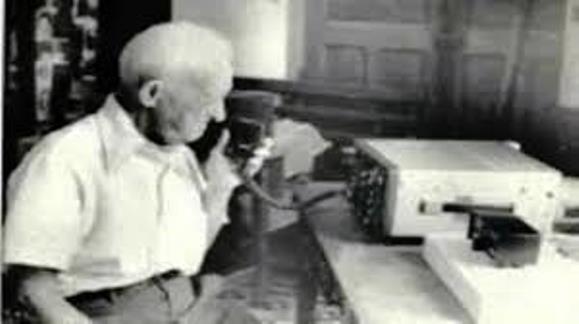
From its inception, radio in Cuba featured sports news produced in broadcast studios, even before the first narrations, which focused on boxing and baseball, were produced. In those early years of radio, sports news was broadcast within news segments, narrated by an announcer.This information was taken from newspapers. There were no sports specialists in the media.
Radio sports broadcasting initially lacked specialized programs such as sports news or listener participation shows until around the 1940s.
Within the sports programming, narration attracted listeners’ attention from the very beginning. Until then, there had only been news reports, but now listeners could follow the athletes’ actions from the stadiums.
On September 14th, 1923, the first official Cuban sports broadcast took place on the small radio station 6 EV in Caibarién, owned by Manolín Álvarez. Feliciano Reynoso described the famous fight between Jack Dempsey and Luis Ángel Firpo, which was being held at the Polo Grounds in New York. Dr. Lorenzo Martín Álvarez translated the events at the New York facility, which he received via radio from the United States, and Reynoso simultaneously described them in Spanish, giving them a narrative style.
The first baseball broadcast occurred in October 1925 on Manolín Álvarez’s own station in Caibarién, renamed 6LO that year, with the games of the U.S. World Series between the Pittsburgh Pirates and the Washington Senators. The method of transmission was the same as that indicated above in boxing, except that now the narrator was José Gastón Caturla, who described what the translator Miguel Balais told him.
This method of broadcasting continued for several years. A very significant event occurred on December 22nd, 1929, at the second Almendares Park, in what is recognized as the first game broadcast on radio in the Cuban Professional Baseball League, when the owner of the facility did not allow the radio transmission.
In the book CUBAN BASEBALL, A Statistical History 1878-1961, by Cuban professor Jesús S. Figueredo, published by McFarland Press in North Carolina, the author notes: “This game was broadcast by radio station CMW, La Voz de las Antillas (The Voice of the Antilles), which had to place a man (journalist Hilario Franquiz) with a telephone and binoculars on the roof of a building near the stadium. Adolfo Gil Izquierdo would then receive the call, in which this journalist would tell him what was happening in the stadium, and together with René Cañizares, “Kañita,” using sound effects, they would narrate the game. Later, the League appealed to the owner, and CMW was allowed to broadcast the championship live from the ballpark.”
The use of sound effects was a radio success, as listeners experienced the excitement of the game as if they were in the stadium.
In 1930, when Havana hosted the Second Central American and Caribbean Games, something similar happened, but fortunately, everything was resolved.
The first international broadcast made directly from the United States to the stadium itself, using a telephone line, was carried out by René Cañizares, through La Voz de las Antillas (The Voice of the Antilles), in 1940, during the World Series between the Cincinnati and Detroit teams.
Baseball, both professional and amateur, which was experiencing a golden age in Cuba from the 1930s to the 1950s, reached every corner of the country thanks to the broadcasts on Havana radio stations and, occasionally, those in the provinces.
The broadcasts of these tournaments greatly contributed to the spectacle and popularity that baseball enjoys today. The rivalry between the supporters of the Havana and Almendares teams, something that dated back to the 19th century, grew stronger every day, although fans of the Marianao and Cienfuegos teams also defended their side of the game.
The major events in the history of Cuban sports have taken place after January 1st, 1959, and radio has been a constant presence throughout them.
Baseball tournaments, our National Sport, occupy a significant place in this analysis, broadcast uninterruptedly since the beginning of the First National Series in 1962, as well as international tournaments of the sport.
There is a rich history of international baseball broadcasts and many triumphs that radio «preserves in its archives.» The most resounding occurred in August 1969 at Quisqueya Stadium in Santo Domingo, the capital of the Dominican Republic, when the national team defeated the United States 2-1 in the decisive game on the 26th, the closing game of one of the most spectacular World Championships and marking the first victory for Socialist Cuba against the Yankees.
The packed stadium constantly cheered on the Cubans, providing additional motivation for our players to rise to the occasion in their pursuit of victory.
Since television did not broadcast the game, the attention of the Cuban people was focused on the airwaves of Radio Progreso. In every town and city, radios were taken out of homes and placed on doorways and sidewalks. In workplaces, recreational centers, cafes, and restaurants, activities were halted, and loudspeakers were set up in the main squares due to the large crowds who did not want to miss the outcome of the game, narrated by the unforgettable Eddy Martin and Juan Antonio “Bobby” Salamanca.
That day, Eddy and «Bobby» enhanced their reputations on national radio with their brilliant descriptions and commentary. Salamanca’s brilliance during that championship made the sugarcane fields tremble and the sugar mill crews sway in a baseball stadium, with a historic narration. In her journalistic work, «Ball, the Most Deeply Rooted Cultural Phenomenon in Cuba,» published some years ago in La Jiribilla, Graciela Pogolotti stated: «(…) Bobby Salamanca wasn’t a linguist, but he intuited that particular communicative quality, as well as the secret thread that links all aspects of human endeavor, leisure and work, among so many others.
Inspired by the 1970 sugar harvest, a monumental effort that involved the entire country, he introduced sugarcane vocabulary into his game narration.»
Sports programming on Cuban radio, in addition to contributing to the popularity of sports, is a source of general and sports culture for our people.
Written by Francisco Soriano.