
Here’s to a 2026 full of new successes.
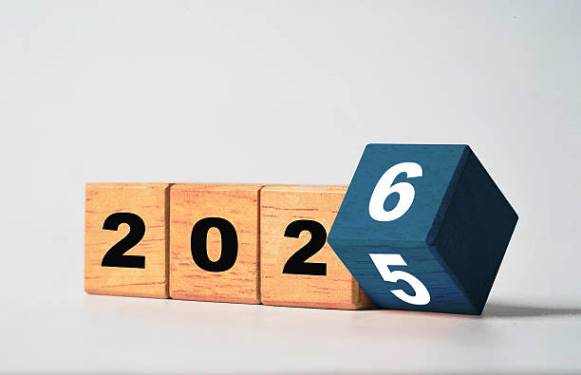
Flipping of 2025 to 2026 on wooden block cube for preparation new year change and start new business target strategy concept.
The Caribbean nation closes this chapter reaffirming its capacity for renewal and its will to move forward, even amidst complex challenges.
The largest of the Antilles bid farewell to 2025 with a scenario marked by strategic reorganization and a determination to advance toward greater efficiency in all areas of economic and social life.
Despite the numerous challenges, the Government Program to correct distortions and revitalize the economy, approved by the Council of Ministers, solidified as an essential tool for strengthening the planning, control, and evaluation mechanisms that underpin productive recovery, income diversification, and the modernization of economic management, as well as for guiding the priorities of the country’s highest leadership.
The social sector maintained a prominent role, with an emphasis on protecting the population, ensuring the vitality of basic services, and recognizing workers in Education, Culture, Health, and Services.
In this section, the National Assembly of People’s Power focused part of its work on evaluating the state budget and supporting programs that ensure care for vulnerable groups, quality education, and the stability of the healthcare system.
The approval of the General Law on Science, Technology, and Innovation marked a turning point by organizing the country’s research activity and uniting universities, specialized centers, and productive sectors toward a common goal. Also noteworthy in the capital was the establishment of the headquarters of the Technical Unit for the Carbon Market, which opens new possibilities for cooperation and financing in environmental projects for the island.
The contributions made in nuclear and theranostic medicine, radiopharmaceuticals, laser technologies, and environmental studies also strengthened the prestige of scientific institutions. Added to this were the aspiration to make Viñales a Global Geopark and the 60th anniversary of the Institute of Meteorology, a national leader in monitoring and responding to extreme weather events.
In the cultural sphere, the 33rd and 46th editions of the International Book Fair and the Havana Film Festival, respectively, stood out, becoming spaces for intellectual resistance and cosmopolitan dialogue, where the Cuban artistic vanguard once again demonstrated its inexhaustible creative capacity.
After more than three decades of work by the Matanzas-based company Teatro de las Estaciones, one of its principal founders, actor and director Rubén Darío Salazar Taquechel, received the Guillermo Heras Ibero-American Stage Management Award.
And, beyond the numerous initiatives launched from across the country, the Cuban Culture Week stood out, with its diverse program throughout the nation honoring Commander-in-Chief Fidel Castro Ruz and the intellectual Armando Hart Dávalos as its two central figures.
One of the most memorable moments was experienced by Raúl Trujillo Díaz from Betancourt, recipient of the International Olympic Committee’s 2025 Lifetime Achievement Award for Coaches, a tribute to his dedication to Greco-Roman wrestling and the training of athletes like Mijaín López.
Despite growing challenges, the island also had a presence at the Junior Pan American Games in Asunción and the Parapan American Games in Santiago, Chile.
Both world champion Leyanis Pérez, boxer Julio César La Cruz, and pitcher Liván Moinelo reaffirmed the quality of Cuban high-performance athletes. Heading towards Santo Domingo 2026, the country is redoubling its efforts in talent scouting and grassroots development, with the conviction that, even in the face of challenges, Cuban sport maintains its vigor and its drive to excel.
The energy transformation and digital transition advanced in 2025, despite the significant infrastructural obstacles that the island still faces. The deployment of new photovoltaic solar parks contributed 1,000 MW of renewable energy to the program, with the aim of reducing dependence on fossil fuels and promoting greater stability of the National Electric System.
At the same time, the expansion of banking services and the implementation of the Single Citizen Registry continued to modernize procedures and services, driven by ETECSA and Xetid. Even with persistent technical and connectivity limitations, these actions represented significant progress towards a more efficient and inclusive energy and digital modernization.
As the culmination of this year’s achievements, Cuba looks toward 2026 and the 67th anniversary of the Revolution’s triumph with the optimism born of a duty fulfilled and a clear understanding of new challenges. Strategic integration into the BRICS bloc and the strengthening of alliances with historical partners have allowed for a more dynamic insertion into the global economy, despite the intensification of coercive measures.
The Caribbean nation closes this chapter reaffirming its capacity for renewal and its will to move forward, even amidst complex challenges. With collective intelligence as its principal strength, the country projects itself toward a future where stability and development are increasingly attainable goals.
Written by Yadiel Barbón.