
Rubén Martínez Villena: Pen, Courage, and Freedom.
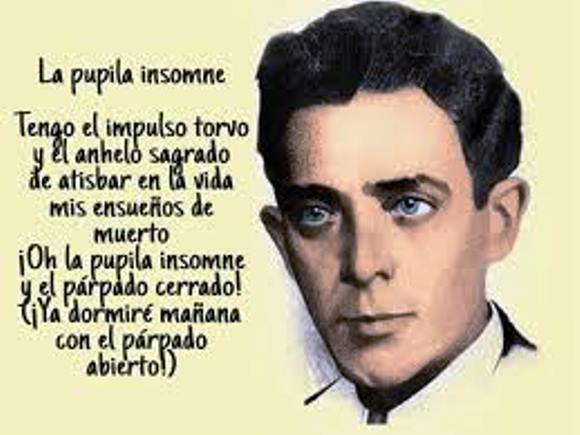
…a patriot who, having the potential to be the greatest of pure poets, chose instead to be the most devoted of revolutionaries.
Ninety-two years after tuberculosis silenced his voice, the historical stature of Rubén Martínez Villena stands tall, not as a relic of the past, but as a vibrant presence in the collective imagination of Cuban sovereignty. His life, though brief, represented a dialectical synthesis between the rigor of a jurist and the passion of a poet; a life deliberately dedicated to the cause of social justice.
As a seasoned observer of our nation’s history, it is imperative to recognize in Villena not only the activist, but also the moral architect of a generation that refused to accept a compromised republic and a government ethics in ruins.
His birth in Alquízar, in December 1899, foreshadowed the development of a mind that would find in the classrooms of the University of Havana the legal arsenal necessary for his struggle. Upon graduating with a Doctorate in Civil and Public Law, Villena did not seek social advancement through the legal profession, but rather the defense of the principles of equality that foreign intervention and local corruption sought to obliterate.
His academic training was the foundation of an enlightened patriotism, where the law was not an end in itself, but the indispensable tool for dismantling the oppressive structures of a Cuba still searching for its true identity.
On March 18th, 1923, the Protest of the Thirteen marked the baptism of fire of his political activism and an irreversible schism in the civil passivity of the time. That act of intellectual audacity against the corrupt purchase of the Santa Clara Convent was not an isolated event, but rather the manifestation of a youthful vanguard that, under Rubén’s leadership, demanded immediate moral reform from the State.
It was at this moment that the intellectual understood that the pen had to be supported by the body, transforming the protest into a national consciousness movement that directly challenged the Zayas administration.
Villena’s sensitivity found in literature a vehicle for struggle, achieving a masterful transition from an intimate aesthetic to a civic lyricism of profound anti-imperialist spirit. Fundamental writings such as his «Civil Lyric Message» bear witness to the evolution of a man who decided to sacrifice his poetic «I» for the collective «we.»
His journalistic work in publications such as Venezuela Libre, El Trabajador, and Bandera Roja constituted a revolutionary pedagogy, where each article was a projectile aimed at dormant consciences, fusing the elegance of prose with the urgency of social denunciation.
On a strategic level, his alliance with Julio Antonio Mella was crucial for articulating the worker-student struggle. From the founding of the José Martí Popular University to his active militancy in the Grupo Minorista and the first Communist Party, Villena demonstrated a superlative organizational capacity.
His entry into the National Confederation of Cuban Workers (CNOC) was not a symbolic gesture, but rather the total immersion of an intellectual in the heart of the proletariat, providing the labor movement with a coherent ideological leadership and unwavering discipline in the face of the onslaught of power.
The epilogue of his life, marked by the ravages of illness, constitutes one of the most heroic chapters in Cuban history: from his deathbed, this «sower of hope» orchestrated the strike that would overthrow the tyrant Gerardo Machado. His death on January 16th, 1934, did not represent the end of his influence, but rather the consecration of a legacy where the purity of ideals and the effectiveness of political action converge.
Ninety-two years after that farewell, Villena remains the intellectual beacon of the nation: a patriot who, having the potential to be the greatest of pure poets, chose instead to be the most dedicated of revolutionaries.
Written by Yadiel Barbón.