

Comebacks.
Comebacks in a baseball game reaffirm the unpredictable nature of this sport. If you go to the stadium—I advise you—stay until the last out. Enjoy the excitement of baseball; don’t let anyone tell you about it.
Among the various meanings of the word «remontada» (comeback), the Dictionary of the Spanish Language states: Said of a team or athlete who overcomes an adverse result or position. In baseball, it occurs with some frequency.
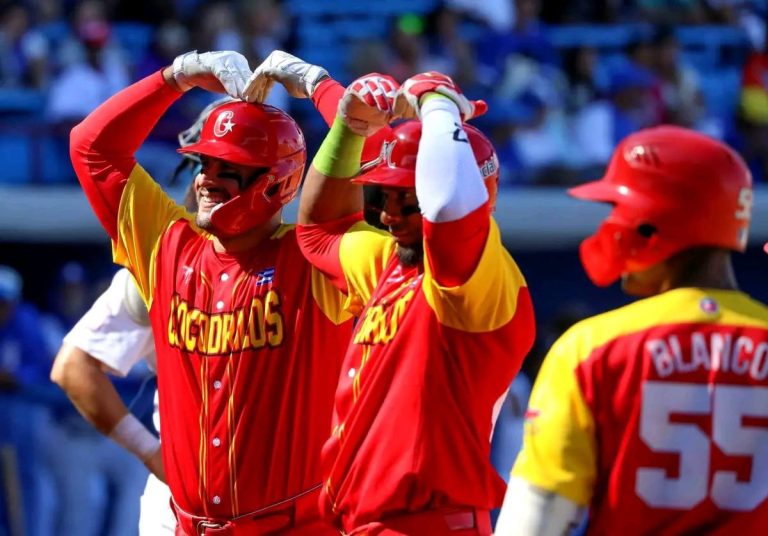
The comeback by the Matanzas team against Industriales last Sunday, February 8th, in the sixth game of the semifinal stage at the Latinoamericano Stadium, I consider among the most spectacular ever seen in the postseason of the National Series.
First, tying the game at nine runs in the ninth inning after trailing by six with two outs is already difficult, but repeating that run count in the following inning, capped by a grand slam by José Amaury Noroña, is a major upset.
Then came another comeback, with different characteristics, in the final against Las Tunas on February 13th, which experts call a «step-by-step» comeback. The Lumberjacks were ahead on the scoreboard 5 to 1 until the third inning, when Armando Ferrer’s team began to chip away at the lead, thanks to a home run by Esteban Terry with a runner on base.
Another run in the fifth, driven in by a hit from Eduardo Blanco, who then sent the ball soaring into the stands of the Latino Stadium in the seventh to tie the game and set the stage for the ninth inning: with Terry on base, a home run by Yurisbel Gracial. Matanzas won 7-5.
Another unforgettable comeback by a team named Matanzas took place in a semifinal series on Saturday, June 8th, 2013, at the José Antonio Huelga Stadium in Sancti Spíritus. The game between Cocodrilos and Gallos was tied at three wins apiece, and the winner would advance to the final of the 52nd National Series.
It was Víctor Mesa’s second year managing a team from our province. On that occasion, the home team was winning 5-0 in the eighth inning when Matanzas staged a ten-run comeback to take the victory.
Since “to remember is to relive”—as the old saying goes—here’s what happened in that memorable inning: in the eighth inning, the Sancti Spíritus pitcher, surnamed Sierra, who had been doing a good job, was replaced by Omar Guardarrama.
The first batter the Sancti Spíritus reliever faced was Guillermito Heredia, whom he walked; José Miguel Fernández hit a line drive single to right field, advancing Heredia to second; Yurisbel Gracial singled to right, scoring Heredia; José Miguel advanced to third.
The Sancti Spíritus management brought in left-hander Javier Vázquez to pitch for Guardarrama; the cleanup hitter, Yadiel Hernández, kept the rally going with a single to center field, driving in José Miguel and advancing Gracial to third.
The Sancti Spíritus front office brings in left-hander Javier Vázquez to pitch for Guardarrama; cleanup hitter Yadiel Hernández keeps the rally going with a single to center field, driving in José Miguel and advancing Gracial to third.
Then there’s another pitching change, and right-hander Ángel Peña replaces Vázquez. Peña strikes out pinch hitter Demis Valdés, but can’t prevent Gracial and Yadiel from stealing third and second, respectively. Víctor Mesa calls time out when Duque comes to bat to talk to him. Duque strikes out, and the inning ends with two outs. Lázaro Herrera doubles to left field, scoring Gracial and Hernández to tie the game at 5.
Eighth hitter Víctor Mesa follows suit, driving in Herrera with his single to center field. Another pitching substitution followed, with Peña leaving the mound and Yoennis Hernández entering, greeted disrespectfully by Ariel Sánchez with another single to center field (to Mesa at second).
Hernández also left the mound, replaced by Yosmani Socarrás. Heredia was hit by a pitch, loading the bases. José Miguel doubled to left, scoring two runs and advancing Heredia to third. Gracial then hit a towering triple to center field, driving in two more runs. Yadiel then drove in Gracial with a single to left field, bringing in the tenth run. Socarrás was also pulled from the game, replaced by Yaniel Sosa, who retired Demis Valdés on a groundout to end the long inning.
There were 14 plate appearances, with ten earned runs, as Sancti Spíritus committed no errors in the inning, recording nine hits (two doubles and a triple).
In that same semifinal of the 52nd National Series (May 29th, 2013), Matanzas was winning 5-1 in the ninth inning with two outs and the bases empty, when the Gallos staged a five-run comeback to walk off the Cocodrilos. Yulieski Gurriel drove in the decisive run. None of the four pitchers used by the Matanzas manager could get the out that would have given them the victory.
In the 53rd season, Pinar del Río would have another comeback in store at Victoria de Girón Stadium against Matanzas. It happened on Wednesday, April 9th, 2014. Matanzas scored five runs in the opening inning, and from the second inning onward, the visiting team added seven, four more in the fifth, and one more in the eighth to win 12-5.
After the first five innings, the Matanzas bats were silenced by the Pinar del Río pitchers. In the 54th National Series, on March 31st, 2015, at Victoria de Girón Stadium, Isla de la Juventud and Matanzas were tied at five runs each until the eleventh inning. In the top of the inning, the Isla de la Juventud team showed no mercy and scored ten runs, at the time a record for a tiebreak game. Ultimately, Matanzas failed to score in their final inning, and Isla de la Juventud won 15-5. In Cuba, the record for most runs in a single inning in the National Series is held by the Las Tunas team with 18. This feat was achieved against Guantánamo on April 19th, 2009, at Van Troi Stadium.
The most offensive inning in history, in an international event, belongs to the Cuban team that participated in the XIII Central American and Caribbean Games, held in the Colombian city of Medellín in 1978. On July 16th, Cuba scored 24 runs against Puerto Rico in the third inning.
Twenty-seven players stepped to the plate, collecting 17 hits, including nine home runs, one triple, and two doubles. All the regular players got hits and scored runs. The game ended 31-2, with 32 hits, including eleven home runs, seven doubles, and one triple. Thirty of the runs were driven in, and the 19 extra-base hits remain records.
There are games where many runs are scored in a single inning, and the game goes to one team, much to the delight of the fans, though they lack the thrill of comebacks that turn a deficit into a victory. When a comeback is underway, no pitcher seems able to stop the inspired hitters. The emotions are palpable in both teams’ dugouts and in the stands.
Comebacks in baseball games reaffirm the unpredictable nature of this sport. If you go to the stadium, I advise you to stay until the last out. Enjoy the excitement of baseball; don’t let anyone tell you about it.
Written by Francisco Soriano.