
Matanzas to have a scientific observatory for risks associated with the PAMI .
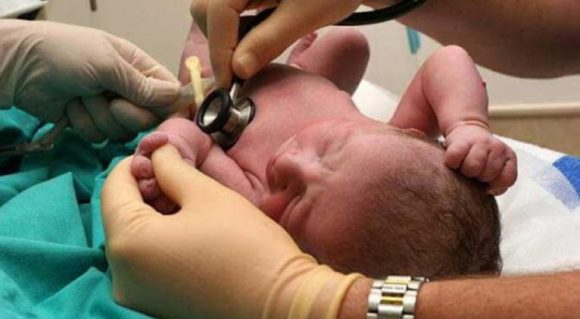
The creation of a Scientific and Social Observatory for Perinatal and Child Health (OCSSPI) in Matanzas will allow for the monitoring, analysis, and proposal of comprehensive solutions to problems associated with the well-being of mothers and children.
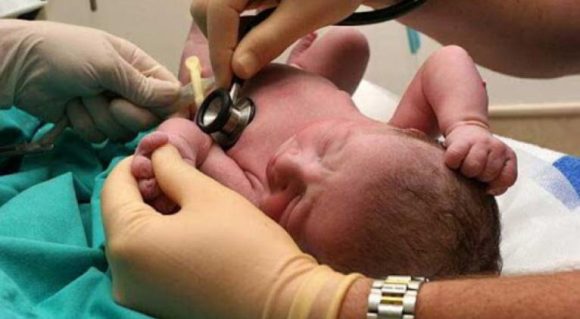
The creation of a Scientific and Social Observatory for Perinatal and Child Health (OCSSPI) will allow in Matanzas the monitoring, analysis and proposal of comprehensive solutions to problems associated with the well-being of mothers and children.
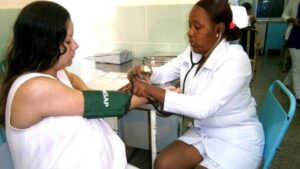
Dr. Yamira López García, provincial director of Health, stated that despite excellent clinical protocols, the indicators of the Maternal and Child Health Program (PAMI) are often affected by factors external to the hospital, such as housing conditions, family dynamics, nutrition, and social vulnerabilities. “We have learned to combat infections, refine surgical techniques, and monitor fetal growth with admirable precision,” she noted.
“However, daily clinical practice teaches us that care for mothers and children begins at home, with what they eat, with their support network, and not necessarily in a doctor’s office. The results in this area are achieved in the field, through outreach, in the clinic, at home, and by seeing patients,” she emphasized.
We needed our own model to uncover the underlying causes affecting the outcomes of pregnancies in women from Matanzas, and thus move from clinical reaction to social prediction. This underpins the creation of the OCSSPI (Center for Social and Political Studies of the Matanzas Region), nothing new, but fundamental as a data intelligence center to prevent risks before they become complications.
It’s about, she specified, transforming statistical data into transformative action, because it’s not enough to know how many babies are born with low birth weight; our scientific responsibility is to identify where they live, why their mothers couldn’t sustain the pregnancy, and what social factors prevented an optimal outcome.
In its multidisciplinary approach, the OBCSSPI will be comprised of obstetricians, pediatricians, sociologists, psychologists, social workers, IT specialists, and a network of territorial liaisons, including the 28 polyclinics and maternity homes, provincial groups of related specialties, and pediatric and obstetric hospitals.
According to López García, in Matanzas, where low birth weight is a significant challenge, the risk-based approach will be applied to all pregnant women in the search for specific variables, essential for a province that ended 2025 with an infant mortality rate of 9.3.
Despite the difficult conditions of the Cuban economy and their negative impact on all sectors, the fact that no deaths of children under one year old were reported in 17 municipalities across the country is noteworthy, demonstrating how much work remains to be done. This effort includes the creation of the OCSSPI (Office of Social and Pediatric Health).
Photos: Taken from the website of the Ministry of Public Health.
Written by Eva Luna Acosta Armiñán.