

From Price Control to Oil Price Escalation: What Is Happening in the Cuban Market?
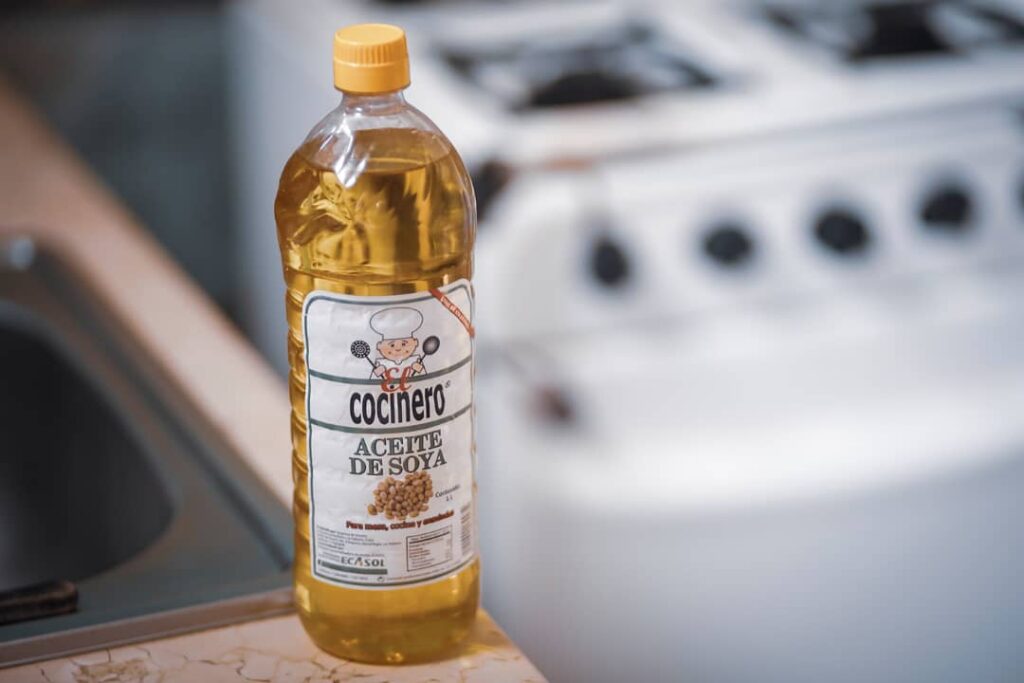
In just a few days, the price of cooking oil has experienced an increase that worries thousands of Cuban families.
In some territories, it is already being offered between four thousand and five thousand pesos, and there are even advertisements with higher prices — a figure that exceeds the current minimum monthly salary.
The situation comes after the entry into force of Resolution 150/2026 of the Ministry of Finance and Prices, which eliminated maximum prices for several high-demand products, including oil, chicken, powdered milk, pasta, and sausages.
The Government itself explained that administrative price caps had failed to contain inflation and, in many cases, ended up causing products to disappear from the formal market.
The expectation was that price liberalization would incentivize greater supply. However, at least in the case of oil, market behavior has been different. Instead of stabilizing, prices continued to escalate rapidly.
Cuba depends almost entirely on imports to supply this product. The scarcity of foreign currency, difficulties in accessing financing, high logistics costs, and sanctions and measures from the United States government against Cuba restrict the ability to replenish inventories.
Added to this is a phenomenon that many consumers denounce: hoarding and resale. When supply is limited and there is an expectation that prices will continue to rise, some merchants prefer to withhold goods or sell them with increasingly higher margins, fueling a spiral of increases.
How many of these prices truly respond to the cost of importing the product, and how many are due to excessive profit margins? In a transparent market, the cost breakdown is an essential tool to justify the final price and differentiate legitimate profit from speculative practices.
No one questions the right of those who import, distribute, or market products to recover their investment and earn profits. What is difficult to justify is that, amid a shortage that affects the population, disproportionate benefits are obtained at the expense of a basic necessity. It is not fair to profit from people’s need.
When an essential food item becomes a business based on family desperation, the impact ceases to be merely economic and becomes an ethical and social problem as well.
The debate should also not be limited to choosing between controlling or freeing prices. Recent experience shows that neither measure, by itself, solves the problem when supply remains insufficient.
As long as there is no market with greater product availability, effective competition, and clear rules for economic actors, consumers will continue to be the most affected.
Because, in the end, the one paying the cost of scarcity, uncertainty, and excessive margins is the pocket of the everyday Cuban.