

Neighborhood Markets: Whose Neighborhood?
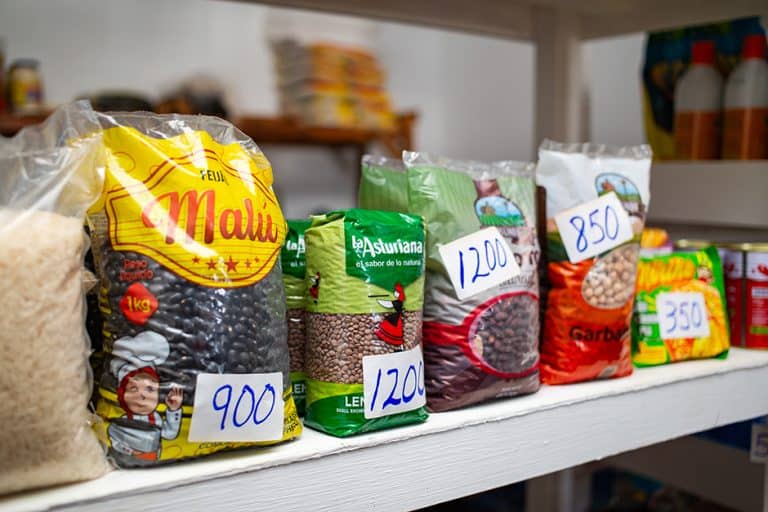
If the name were honest, they would not be called Neighborhood Markets. They would be called Uptown Neighborhood Markets, Exclusive Zone Markets, Private Urbanization Markets, or simply Wealthy Neighborhood Markets.
Because an establishment whose prices the neighborhood cannot afford does not belong to the neighborhood: it belongs to another stratum, another social geography, to that parallel country where inflation is measured not in anguish but in comfort.
The official promise was clear: around 20 basic products with prices up to 15 percent lower than those of other private businesses.
Reality, however, crashes against the pockets of retirees and workers. Prices remain unattainable. In many homes, buying rice or milk is no longer a routine act but an anguished decision: it means giving up medicines, transportation, or other indispensable expenses. That is not a neighborhood market. It is a market where scarcity disguises itself as supply and inequality is sold as competition.
The problem is not only that prices are high. It is that the announced discount does not appear anywhere in a clear and generalized way. On the contrary: powdered milk, rice, and wheat flour — the core of any family relief policy — are sometimes cheaper among self-employed workers than in the so-called Neighborhood Markets.
The paradox is evident: a state system that, with all its shortcomings, at least guaranteed a regulated quota is being dismantled and replaced by a commercial network whose prices depend exclusively on the ability to pay.
The ration book did not solve the food shortage, but its disappearance has not brought abundance either. For millions, the change means going from receiving little to having to buy everything at prices they cannot afford.
Meanwhile, the managers of these markets receive five-percent bonuses on the sales tax, tax exemptions for those who wholesale with entities of the Domestic Commerce system, and up to two years of free leasing of state premises, extendable if they invest.
The contrast is hard to ignore: the State gives up revenue, but that waiver does not reach the consumer’s pocket. The supposed reduction stays along the way.
The tax benefit does not translate into accessible prices or greater availability. It looks more like an incentive for a few to capitalize than a consumer protection policy.
Calling an establishment inaccessible to the neighborhood a «neighborhood market» reveals an essential contradiction, given that what is happening has twisted the course of the original idea.
It is not a popular neighborhood market, nor a workers’ neighborhood one, nor a humble neighborhood one. It is an uptown neighborhood market, an exclusive neighborhood one.
The dismantling of the grocery stores and the ration book, without a socially viable alternative, does not constitute a reform that so far convinces: it is barely the replacement of an administered scarcity by a commercialized inequality.
And to that inequality, a name is given that sounds like closeness, community, neighborhood. But the neighborhood — that real neighborhood, that of retirees and workers, in a nation that is aging, that shows a negative population growth balance — continues to look at prices from the outside, while some, naturally, capitalize their businesses at the neighborhood’s expense.