

Electronic Payment Gateways: Payments, Non-Compliance, and Cash in Cuba
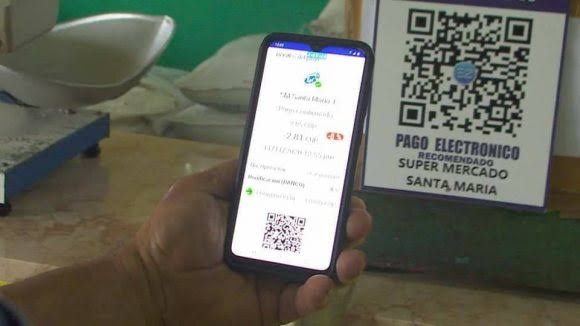
The use of electronic payment gateways in Cuba faces a contradiction that affects retirees, workers, and the public who go to establishments seeking their daily sustenance.
While the country promulgates legal bodies that «oblige» self-employed workers and MSMEs to accept payment by transfer, cash continues to be the medium that moves the everyday economy.
Payment to retirees: an insufficient variant
In Matanzas, there are thousands of retirees and more than eleven thousand non-state economic actors. However, only a little more than 500 retirees receive their pension through these new forms of non-governmental organization. The figure shows that the established variant is not enough to cover the demand of a population that depends on that money to buy food.
Grocery stores, known in Cuba as «bodegas,» no longer offer products from the regulated basket. That forces retirees and the people in general to resort to establishments where payment by transfer is not always accepted.
Economic actors and their arguments
Self-employed workers and MSMEs offer reasons for not accepting transfers: «We already received today’s,» «there’s no power,» «there’s no connection.» These excuses are repeated in establishments where the customer has no other option but to pay in cash, if they have it.
The legal obligation exists, but its compliance is not verified with the same frequency with which it is promulgated.
The cash cycle
To understand the mechanism of self-employed workers, one must follow the money’s journey. They protect their cash and do not deposit it in the bank, or they do so on a small scale.
With the cash collected, they must pay their suppliers — a figure who also does not accept transfers. If the supply they need is in dollars, then they go to the black market, because the bank does not sell them.
The question that remains without a clear answer is how they cash what they receive by transfer. The bank delivers a tiny amount that is not enough to restock the shelves or reserve merchandise for new sales.
The voice of the people
It is speculated that there are people with abundant cash who offer hard currency in exchange for a transfer, with a surcharge that can range between 15 and 30 percent.
A practice that has not been officially confirmed, although it circulates in everyday conversation. The saddest thing about this is that the one who really pays that surplus is the people, because merchants add it to the products they sell.
Objective and material conditions
When any legal body is promulgated, the first thing the one who promulgates it must know is whether there are objective and material conditions to apply it. If it is evaded, it is not always out of disobedience; in this case, it seems to be out of necessity.
If the bank does not have cash to pay salaries and pensions, why does it demand that self-employed workers accept transfers? This seems paradoxical to me.