
The Argentine Comeback That Unleashed Egypt’s Fury
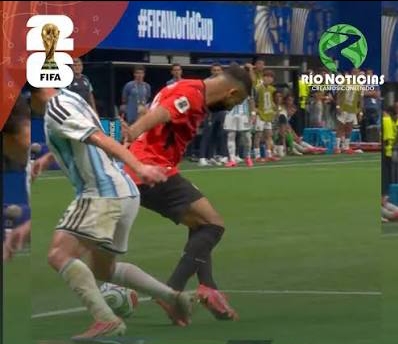
Argentina sealed its passage to the quarterfinals of the 2026 World Cup with an epic comeback against Egypt, but the final 3-2 scoreline was completely eclipsed by the storm of controversy that erupted after the final whistle.
When Egypt was winning 2-0 and was close to achieving its best historical result in a World Cup, the Argentine national team reacted with goals from Cristian Romero, Lionel Messi, and a header from Enzo Fernández in the 90+2 minute that completed the feat. However, the Albiceleste’s joy collided head-on with Egyptian indignation.
The epicenter of the refereeing controversy lay in two key plays. The first was the disallowance of Mostafa Zico’s second goal for Egypt, when VAR detected a previous foul by Marwan Attia on Lisandro Martínez at the start of the play.
The second, and perhaps the most painful for the Egyptians, was the non-award of a penalty to Mohamed Salah seconds before Argentina’s winning goal. Decisions that, for Egyptian coach Hossam Hassan, evidenced favoritism toward the defending champion.
But Hassan did not stop there. In a press conference loaded with fury, the coach crossed his arms in a gesture of protest against racism — FIFA’s official gesture — claiming that his team was subjected to insults from the Argentine bench after Enzo Fernández’s goal. According to his version, referee François Letexier ignored his complaint and showed him a yellow card.
«We have suffered an injustice,» Hassan fired, stating that he would not watch «another minute of the World Cup.»
The Egyptian coach’s statements escalated the controversy to unexpected levels by suggesting a conspiracy: «Perhaps they wanted the world champion and Messi to continue in the Cup for marketing reasons.»
Serious accusations that, so far, lack evidence to support them, while FIFA remains silent on the racism complaint.
What is a fact is that football, once again, demonstrated that comebacks can be as glorious for some as they are devastating for others.