
Cuba and South Korea: A Bond Beyond Politics
South Korea, cradle of important milestones in pop music of the last decade as well as films with great global reach that have marked a before and after in film history, has left traces in the daily life of our Island beyond its media impact.
The introduction of its fashion, culinary arts, and even ways of acting, fused with our own, give rise to a culturally more diverse Cuba.
The well-known Korean Wave or Hallyu, a movement that began to gain strength on the Island around 2013 and exploded with the progressive development of the internet, acts as the trigger for this mixture of artistic riches between both nations.
Not even the diplomatic disconnection between them for several decades until its reestablishment in 2024 slowed the development of this centuries-old cultural fusion.
To the surprise of many, the arrival of successful dramas from the Asian country in our territory occurred in the early 2010s and not in recent years as is commonly believed, with television broadcasts of some such as My Fair Lady, The Queen of Wives, and You’re Beautiful.
These were proposals more aimed at naive romance and the customs of the era, viable alternatives to renting predictable Latin American soap operas.
Even the acclaimed K-pop music became known to us in the same year it went viral worldwide. In 2012, singer and composer Psy released his song «Gangnam Style,» which still enjoys the prestige of being one of the most played songs on the YouTube platform and made many Cubans follow its catchy steps during its heyday.
Now, the references of South Korean fashion in our own are, by far, fascinating. One more option in the face of more urban aesthetic currents such as reggaeton.
Cuban youth have found in Eastern aesthetics a means of self-expression and identity, manifested as a result of the consumption of music and audiovisual content from the Asian territory.
Thus, preference for a more streetwear style, loose clothing, T-shirts with minimalist prints, and hooded sweatshirts reached unexpected extremes despite the scarcity of resources on the Island and differences in climate, with the replication of Seoul’s looks in the full heat of the Caribbean.
However, the influence goes beyond clothing, with more extreme and conscious skin care. The popularization of skincare is more visible nowadays despite the difficulty of acquiring these cosmetic products, sometimes opting for the creation of similar models using household tools.
Regarding makeup, the more delicate and lighter, the better, with the cult of diffused lips in cherry tones.
South Korea’s concept of beauty has to some extent redesigned youth styling in Cuba. In males, we increasingly observe haircuts with shaved sides or very short compared to the top, while females opt for light bangs and fantasy colors.
The variants of Korean cuisine on our tables also constitute a phenomenon in full expansion. Although at first glance Cuban cuisine, based on rice, beans, pork, and mild seasonings, seems the radical opposite of the sister nation’s gastronomy — famous for its fermented foods, seaweed, and spicy flavors — together they create an explosion of flavors worth trying.
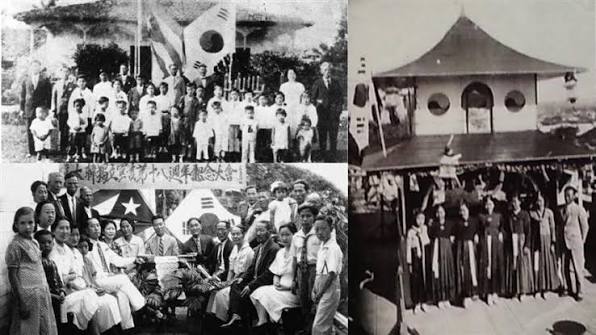
It is unknown to most that the foundations of the Korean presence in our territory took place in 1921 when about three hundred people arrived from Mexico to work in the henequen fields in the province of Matanzas.
Their descendants kept some culinary traditions alive but were forced to replace them with native ingredients.
Ancient recipes such as Bibimbap or Bulgogi are still cooked in the homes of these descendants, combining Asian heritage with Creole seasoning.
The true massive boom happened with the popularization of Korean series, with dishes that were once perceived as strange now awakening the curiosity of thousands of city dwellers.
Seeing these characters eat everyday dishes so enthusiastically on screen, such as instant ramen — recurrent on the Island in 2026 with variants from other regions of the world — has made it a star product and a true lunchtime ritual.
South Korean gastronomy has ceased to be an exotic, distant flavor and has transformed into a social experience, a way to connect with a global culture.
Because of this, in recent years we have witnessed the opening of the first markets, cafeterias, and spaces dedicated to the excellence of Korean cuisine as well as other art forms.
Not only clothing, self-care, and food have experienced changes in our customs since the first incidences of this Eastern culture.
It has permeated something much deeper, such as our behaviors, gestures, and codes of respect, allowing a better understanding of this cultural clash given the historical fame of Cubans as extroverted and impersonal beings.
The representation of more formal greetings and generally more reserved and restrained body language burst into the contemporary lives of Cubans and cause a stir among the older generations.
These changes are revealed sometimes unconsciously due to their deep internalization. The most common are bows seen as small inclinations when greeting, thanking, or saying goodbye, and the effusive «Korean heart» that has captured the attention of international media.
The Hallyu Wave is redefined as a movement capable of shaping schematic structures and introducing reformed nations. Cuba, not alien to this phenomenon, welcomes these Eastern influences into its cultural stew.
Through nods in our culture and popular speech, for more than a decade now, South Korea has been part of the cultural heritage of the largest of the Antillean Caribbean islands.