
Making the Ugly Shine
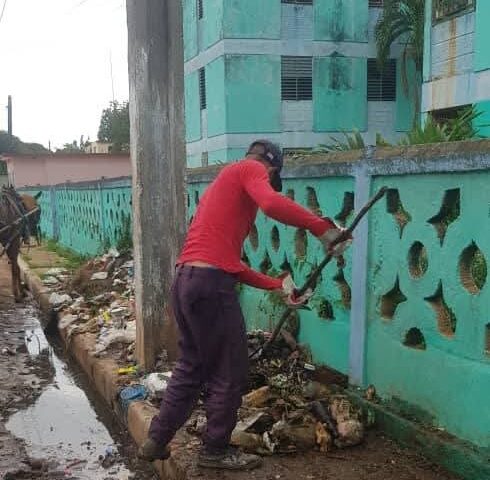
Jovellanos – In the Horacio Rodríguez People’s Council of the municipality, there are corners the city prefers not to see. Abandoned tenements, the edges of the railway line, the backyard of the old dairy. There, garbage grows like stubborn weeds. But every morning, before the sun scorches the earth, the men and women of the cleaning and sanitation service show up with their brooms, their shovels, and a truck that seems to hold on by sheer faith. They are the ones who, without fanfare, clean those corners that few want to look at. And while they work, amid the rustle of torn bags and the dry thud of containers, one remembers Liuba María Hevia’s children’s song: «Garbage man, garbage man, whom no one wants to look at, but if the moon comes out, your cans will shine.»
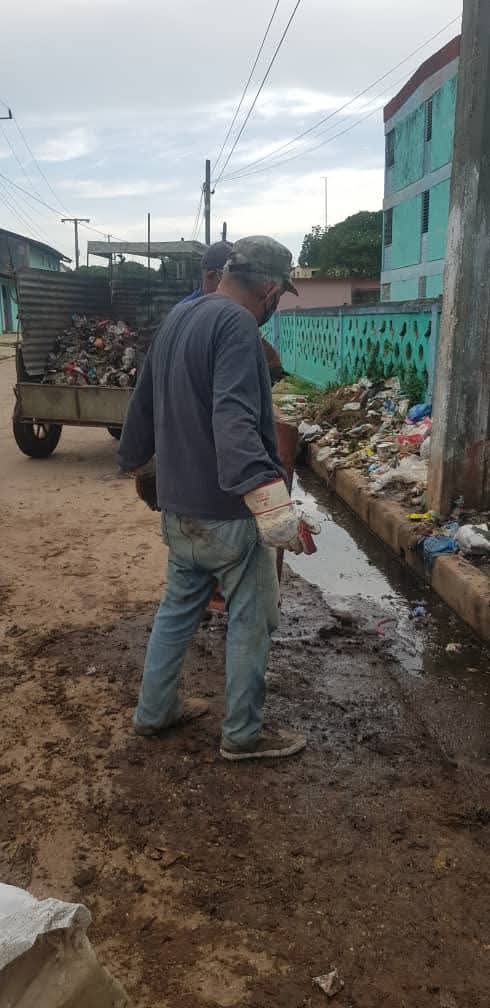
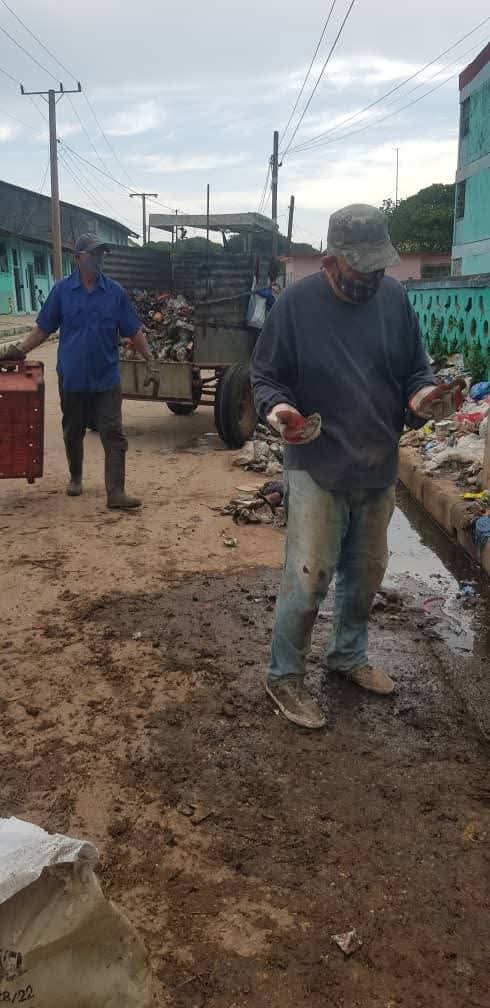
The critical spot is behind the neighborhood grocery store, next to the medical clinic. There, residents have been accumulating pruning waste, old mattresses, and black bags that no dog has dared to open for weeks. The smell is dense, almost solid. But the sanitation workers do not hesitate. With worn gloves and masks dampened by sweat, they begin the harvest. One of them, a young man with a faint mustache wearing overalls patched with adhesive tape, comments without looking up: «If the moon doesn’t come, we come.» It’s a nod to the song, though he doesn’t know it.
Because the song «Lo feo» (The Ugly) speaks precisely of that: putting love into what others discard. «In an old washbasin, I planted violets for you,» the lyrics say. And here, the washbasin is a fiber cement tank split in two, and the violets are the few scraps of cardboard they separate for recycling. It’s not corny poetry; it’s the routine of a People’s Council where resources are scarce, but willpower is not. The residents of Horacio Rodríguez know that without these workers, the neighborhood would become an open-air dump.
The workday stretches under the crushing sun. The truck — an old ZIL from the 1980s — coughs and advances in small bursts. The workers load, throw, arrange. Every now and then, a neighbor peeks out and thanks them with a glass of water or a «thank you, comrade.» Nothing more. But that’s enough for them. As the brigade supervisor, Rafael, who has been in this trade for twenty years, says: «The ugly thing is not the garbage; the ugly thing is people getting used to it.»
By dusk, the corner has changed. It’s not beautiful, of course: the ground is still cracked, the wall of the grocery store is stained with moisture. But it’s clean. There are no more flies hovering over organic waste, nor the danger of an infectious outbreak for the children playing on the corner. The workers put away their tools. One of them lights a hand-rolled cigarette, another wipes his forehead with his arm. The sky over Jovellanos turns indigo, and the moon appears, round and silvery. And then, would you believe it, among the stones on the ground, a couple of beer cans that had been forgotten seem to shine.
The children’s song ends with a promise: «Little cockroach wing carried to the anthill, that’s how I want to be taken to the cemetery when I die.» It’s a harsh image, but also a reminder that everything, even the most repulsive, can re-enter the cycle of life if there are willing hands to do it. That is exactly what the communal services do every day in the Horacio Rodríguez People’s Council: a praiseworthy, silent, almost invisible effort. They transform the geography of neglect into a space where tomorrow, perhaps, a child can plant violets in an old washbasin. Or at least, where no one has to live amid filth. And that, in Jovellanos, is a way of making the ugly shine.