

The Conga Is Also Resilience
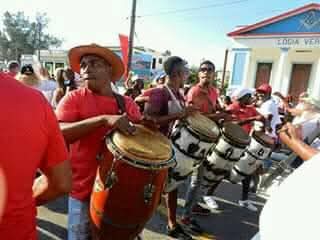
Digital sites in South Florida have hurled pejorative labels at a crowd for enjoying a conga. They claim it promotes violence through the chorus chants.
Analyzing the phenomenon in depth, reviewing similar publications on social media about other comparsas (street bands) as part of the summer festivities kickoff, it becomes clear that what irritates them is not so much the chorus, but the very existence of the conga itself.
The most recalcitrant sector in South Florida cannot tolerate that at this point there is still energy to dance to the rhythm of rumba. They do not understand what it means for a true Cuban to roll along behind a comparsa, and the frenetic movement that drives the body when the drums sound.
This is not the first time they attack that joy that is real and spontaneous. Behind a conga dance the doctor and the bricklayer, the master in philosophy, the neighborhood drunkard, and even that regal combatant.
The same ones who turned images of a sparsely attended square after a Manolito Simonet concert in Guanabo into a news headline now show rage at photographs displaying people enjoying a conga.
It is as if smiling faces irritate them because joy is not allowed — at least not on social media. There will only be space for information reflecting despairing faces due to so much scarcity, which certainly exist, as one finds them in many parts of the city, a reflection of that harsh reality that hits us so hard.
But also emerging are faces determined to fight back against deprivation, to overcome the jolts of an empty stomach, and who can doubt that once in a while a smile may spring from a simple battle won.
That is why people will always turn to the conga, to set aside at least for a brief moment the burden, and for that very reason the offense it causes in some twisted minds that the people dance in the streets is disconcerting.
Perhaps that is why digital sites like «Cubanos por el mundo» viciously attack one of the most authentic popular expressions of Cuba’s humble neighborhoods.
The attack and disregard are so great that mere countless sanctions — which they applaud and support — are no longer enough; they want to snatch from us even the brief delight that music produces.
Unknowingly, they hurl offensive expressions that defile those modest, plain people they claim to defend, with such a level of disrespect and rancor that they can use the most abject epithets against a group of individuals for the simple act of dancing.